
logo
Home/Blog/How to Play Slice Master: 3 Ultimate Rules to Stop Failing

How to Play Slice Master: 3 Ultimate Rules to Stop Failing

Joker
January 15, 2026
banner

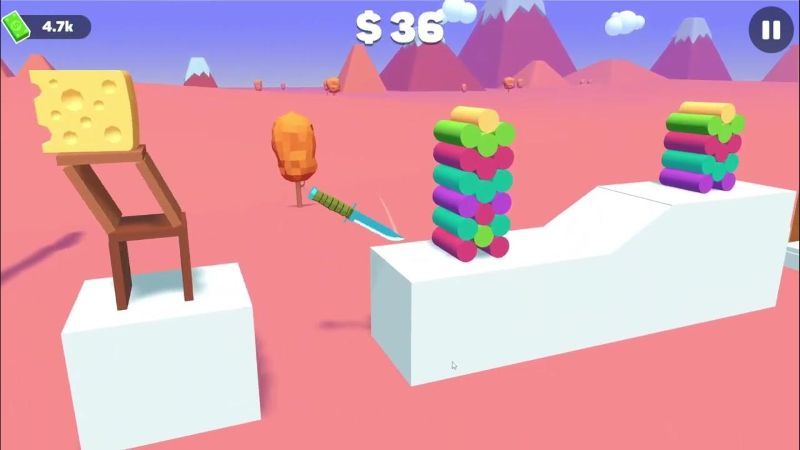
How to Play Slice Master comes down to one repeatable loop: time your flips with a steady cadence, slice only high-value safe targets, and aim for the best end-level bonus so you stop losing runs to panic taps and bad finishes. Based on practical gameplay testing and the core timing logic of Slice Master, the fastest way to improve is not clicking faster, but enforcing three simple rules that stabilize your landings and protect your score.

Next, you will get the 3 ultimate rules to stop failing, plus quick control basics and a short FAQ so you can apply the fixes immediately.

Quick Start: Controls and What “Winning” Means

Slice Master is a one-input timing game. Your single action controls when the knife flips, how far it travels, and how safely it lands.

Your core objectives are:

  • Slice for points
    • Hit safe objects consistently to build score.
  • Avoid hazards
    • Pink obstacles are the classic run killers.
  • Cash in the bonus
    • End-of-level targets can boost or reduce your score depending on what you land on.

If you keep failing, it is almost never “bad luck.” It is usually one of these: inconsistent rhythm, greedy slicing, or a weak bonus choice.

The 3 Ultimate Rules to Stop Failing in Slice Master

These three rules work because they reduce randomness:

  • Rule 1: Lock a repeatable flip cadence
  • Rule 2: Slice for value, not for noise
  • Rule 3: Treat the bonus target like the real finish line

Let’s break them down into actions you can apply right away.

Rule 1: Lock a Repeatable Flip Cadence

Most players fail because they flip on emotion. Slice Master rewards rhythm.

Build one “default flip” and reuse it

Your goal is to reduce variance by repeating the same timing pattern across most platforms.

Use a simple flip set:

  • Default flip
    • Your safest timing for normal jumps.
  • Short correction flip
    • A smaller flip used to re-center after a messy landing.
  • Commit flip
    • A bigger flip used only when a gap forces it.

If you are improvising every jump, you are gambling every jump.

Stop panic-tapping when the landing looks ugly

Panic inputs usually do two things:

  • They change rotation at the worst possible moment.
  • They push you into the next hazard pattern before you are stable.

Adopt a reset rule:

  • If your landing is unstable, your next flip should be conservative.
    • Prioritize stabilization first, then resume scoring.

Watch the landing zone, not the knife

A common upgrade in skill is switching your focus:

  • Beginners watch the knife.
  • Consistent players watch the next landing zone and time their flip to hit it cleanly.

Practical cue:

  • Pick a consistent visual point on the platform or target cluster.
  • Time your input relative to that point every attempt.

Rule 2: Slice for Value, Not for Noise

Not every slice is worth the risk. Your score grows more from long, clean runs than from one greedy moment.

Use a clear priority order

When deciding what to slice, follow this order:

  • Safety first
    • Avoid pink hazards even if a big cluster looks tempting.
  • Position second
    • Center landings give you more control on the next flip.
  • Score third
    • Points only matter if you survive long enough to multiply them.

If you reverse this order, your runs will be shorter and you will “feel stuck” even if you occasionally pop off.

Treat slicing as a plan, not a reflex

Slice Master is a timing and decision game, not just a click-fest. Make slicing intentional:

  • High-density, low-risk clusters
    • Prioritize groups you can slice without drifting toward edges.
  • Awkward angles
    • Skip targets that force risky landings.
  • Hazard-adjacent objects
    • Treat them as optional unless you are already stable.

A useful mindset:

  • You are farming consistent points, not chasing every available point.

Consistency beats one highlight run

One lucky run does not equal improvement. Real improvement is the run you can repeat three to five times in a row.

Related: Avoid Spikes and Slice Everything in Slice Master

Rule 3: Treat the Bonus Target Like the Real Finish Line

Many players do fine through the level, then lose big value at the bonus.

Use a simple bonus decision policy

Most bonus systems reward:

  • Multiplication as the best outcome when reachable safely.
  • In addition, it is the best safe alternative.
  • Subtraction and division are score killers.

Make it automatic:

  • If you can reach multiplication safely, take it.
  • If multiplication is risky, take addition.
  • Avoid subtraction or division unless there is no other option.

This alone can make your score jump without any mechanical changes.

Slow down before the bonus

The last few seconds are where players rush and mis-time easy flips.

Do this instead:

  • Reduce speed slightly
    • You want the best bonus, not the fastest finish.
  • Set your final angle
    • Aim deliberately for the best zone rather than squeezing in extra slices.

High-Score Habits That Stack With the 3 Rules

Once you follow the rules, these habits accelerate progress.

Train with one focus per session

Short, focused practice beats long, messy grinding:

  • Session focus: fewer deaths
    • Play conservatively and learn patterns.
  • Session focus: cleaner bonus landings
    • Practice setting up the final approach.
  • Session focus: rhythm
    • Repeat your default cadence on most jumps.

Remember what unlocks actually do

Unlocks and skins are motivation, not a substitute for timing fundamentals. The biggest gains still come from cadence, value slicing, and bonus discipline.

The Most Common Reasons You Keep Failing

If you are stuck, one of these is almost always the cause:

  • You chase every slice
    • You drift into hazards and edge landings.
  • You flip emotionally
    • Panic timing destroys consistency.
  • You ignore the bonus strategy
    • You give away score at the finish.
  • You rush the last jumps
    • The bonus approach is where focus matters most.

Fix the one that matches your run history and you will feel improvement quickly.

Geometry Dash: Timing Discipline Wins

Geometry Dash is built on the same core skill Slice Master demands: rhythm-based timing under pressure. If you have ever practiced Geometry Dash, you already understand the mindset that stops failing here: lock a repeatable cadence, avoid greedy inputs, and treat the final approach as the most important section. Apply that discipline in Slice Master and your landings become cleaner, your runs last longer, and your score climbs with far fewer “random” deaths.

FAQ

How to Play Slice Master in one sentence?

Press Space, click, or tap to flip the knife, slice safe objects for points, avoid pink hazards, and aim for the best bonus target at the end.

What are the controls in Slice Master?

It is a one-input game: Space or click on desktop, tap on mobile, with timing controlling your flips.

What should I avoid in Slice Master?

Avoid pink hazards and any risky slices that force edge landings or unstable recoveries.

How do I stop failing early?

Lock a repeatable flip cadence, slow down, and prioritize safe landings over greedy slicing.

How do I get higher scores?

Stay alive longer, slice consistently, and prioritize strong bonus outcomes like multiplication or addition.

Why does my score drop at the end of the level?

You likely landed on a negative bonus outcome like subtraction or division, or you missed the best bonus zone.

Is Slice Master really just a one-button game?

Yes, but the difficulty is in timing, landing control, and choosing what is worth slicing.

What is the best rule for beginners?

Rule 1: build one default flip cadence and repeat it until your landings are stable.

Should I always go for multiplication at the bonus?

Only if it is safe. If it forces risky positioning, take addition and preserve the run.

How can I improve fast without grinding?

Practice one goal per session, especially rhythm and bonus targeting, and avoid panic flips.

Final takeaway

If you want to master How to Play Slice Master and stop failing, commit to three rules: repeatable flip cadence, value-first slicing with hazard discipline, and smart bonus targeting that favors multiplication or addition. Apply those rules for a few sessions and Slice Master stops feeling random and starts feeling controllable, which is exactly when your runs become longer, cleaner, and consistently higher-scoring in Slice Master.

logo
Contact Advertising
Email: support@slicemasterunblocked.com
Address: 742 Sharp Edge Lane, Austin, Texas, United States
Send with your contact information (telegram)
Copyright © 2025
Disclaimer
This site is an unofficial fan project and is not affiliated with or endorsed by the creators of Slice Master. Games featured on this site are embedded from publicly available sources and are provided for entertainment and educational purposes only. If you are the copyright owner of any content shown here and wish to request its removal or modification, please contact us.